
Press release checklist: The ultimate step-by-step guide
- Most of the time, you don’t get much say on what others write about you. However, what you can control is the images you put out there. And you know what they say, a picture is worth a thousand words! This is what makes media kits such an important tool when it comes to sharing exciting news.
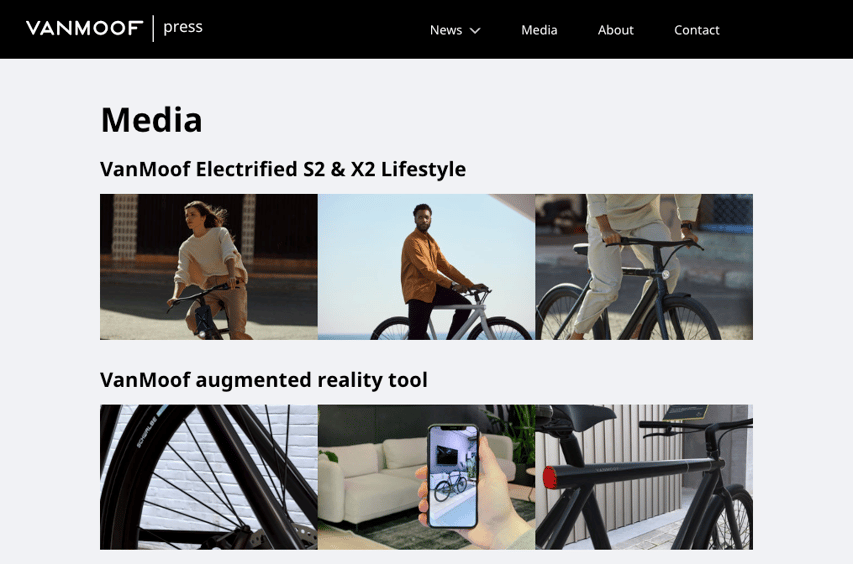
- What exactly is a media kit? It’s a folder filled with downloadable assets that supplement a story. The most common features are high resolution photos but you can also add videos, data visualisations and technical specifications.
What makes a good media kit? Here are some examples. [21]
- PR today is all about the user experience, so make it easier for journalists to search for photos and download the ones they like best in high-res. They’ll be forever grateful for it.
6. Add quotes:
Adding a human voice to your story can give it a personable touch. Journalists typically use quotes to enrich their stories as well. But remember: be strategic! Use a key stakeholder or authority figure to help you narrate your story. In the case of a partnership or collaboration, for example, having a quote from both parties will save a journalist time and effort, which means your chances of being published will increase! It’s a win-win situation.
7. Share other coverage:
Has your story been covered by another source or outlet? You’re in luck! Linking news articles to your press release enables you to gain more credibility. Journalists tend to be skeptical about companies sharing their own news, but if they can spot new facts or quotes written by other journalists, it is likely that they will consider your news more trustworthy. By granting easy access to this information PR teams can save journalists time and extra clicks.

- In case a journalist wants to follow up with your story, it is crucial to include clear links to contact details and spokespeople. Some journalists will hop on a quick call, others will prefer email, some even like to connect via LinkedIn. Provide basic contact information such as name, role, phone number, email, and links to social media.
- Who should your contact person be? Depends on the organisation or news. Most of the time the person listed is the one responsible for the distribution of the press release. To make it more appealing, make it clear that they will also have access to a representative of the company, be it the CEO, founder, project leader or whoever is the best resource for an interview.
9. SEO and PR: go together like a horse and carriage
- Search engines use backlinks as a way to rank a website. Therefore, the more backlinks a page has, the higher it ranks on major search engines, including Google. How can you benefit from backlinks? If a high-ranking website provides a backlink to your website, it is likely that you will get some of that credit yourself. Make the most out of the spotlight you will receive by incentivising journalists with newsworthy information that is just too good to pass up.
- For example, if you’re announcing the release of an annual report, share links to the online report on your website so that journalists can redirect their readers back to your site.
- Want to know how users are reaching your information? A good hack is to add UTM codes to your URLs so that you can track and measure the performance of your sources. We have built a Google Sheet to create UTM-tagged URLs; to use it, click on this link[22] and select file → make a copy.
Learn more about PR & SEO: why PR professionals should focus on findability, instead of pitching. [+ 5 tips to leverage SEO] [23]